Direct answer
What Is an Activewear Product Development Brief?
An activewear product development brief is the controlled handoff between a buyer's product idea and a factory's development work. It identifies the user, product purpose, reference sources, details to keep or change, fabric direction, fit, branding, quantity, timing and approval method. It is more specific than a mood board but precedes, or helps create, the final tech pack.
Development Brief, Reference Sheet and Tech Pack Are Different
Product development loses control when buyers treat every file as interchangeable. Showroom notes record what was observed. The development brief decides what should be built. The tech pack specifies how an agreed garment should be manufactured. Keeping these roles separate lets a supplier identify missing decisions instead of silently guessing.
| Document | Primary purpose | Typical contents | Decision stage |
|---|---|---|---|
| Showroom reference record | Capture source information | Photos, style code, fabric code, initial comments | Research and selection |
| Product development brief | Define the requested product | User, purpose, keep/change/verify, commercial scope | Feasibility and concept development |
| Tech pack | Control manufacturing details | Measurements, construction, BOM, artwork, tolerances | Sampling and production |
| Sample review report | Record evaluation and revisions | Fit photos, measurements, defects, approved changes | Sample approval |
A new brand may ask the factory to help convert a brief into a tech pack. That service does not remove the buyer's responsibility to approve product intent, measurements, branding and performance. The current version of each document must be named and dated.
Organize Showroom References Before Writing the Brief
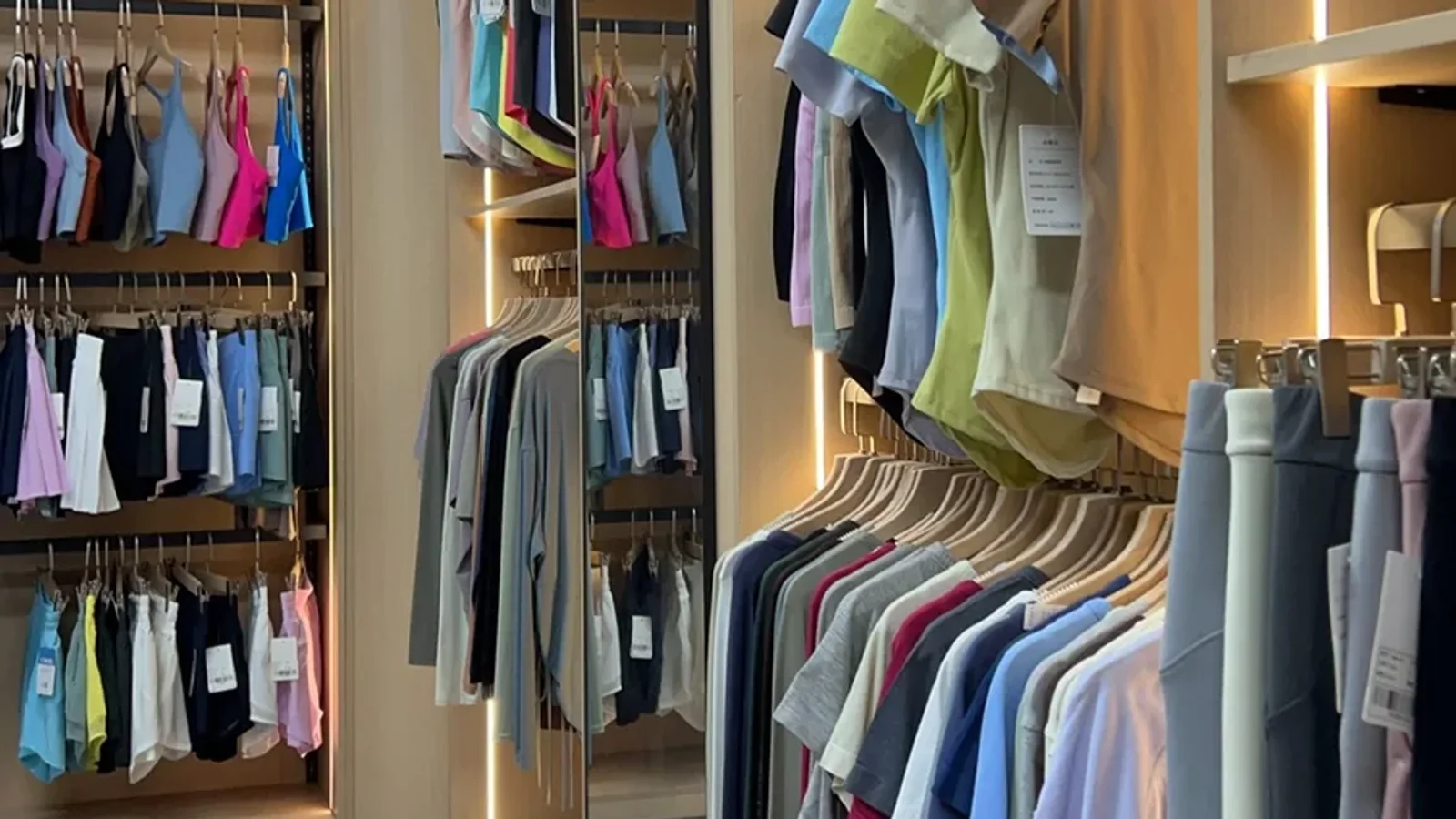
Begin with the approved reference records from the activewear sample showroom sourcing guide. Remove duplicate images and any sample that the supplier has identified as confidential or unavailable. Give every remaining source a short identifier such as REF-A, REF-B or FAB-03.
Each reference must have one defined job. REF-A may show the preferred silhouette, REF-B a pocket entry and FAB-03 the desired handfeel. Do not tell the factory to combine three garments without stating which feature comes from each. Conflicting references cause pattern and costing assumptions.
| Reference field | Required entry | Control question |
|---|---|---|
| Reference ID | Unique code and approved image | Can both teams identify the same source? |
| Reference purpose | Silhouette, fabric, construction, trim or color | Which exact decision does it support? |
| Keep | Feature that should influence development | Is the instruction specific and permitted? |
| Change | Feature that must be redesigned | Is the target condition clear? |
| Verify | Unknown material, measurement or feasibility point | Who will confirm it and by when? |
Use annotations that survive handoff
Place numbered callouts on images and repeat the same numbers in the written instruction. “Raise neckline 25 mm at center front” is actionable; “make neckline safer” is not. When a measurement is provisional, label it as a target for sample evaluation rather than a final production tolerance.
Required Fields in an Activewear Development Brief
A useful brief balances product, technical and commercial information. It should be complete enough for feasibility and initial costing without pretending that untested decisions are final.
| Field | What to state | Evidence or attachment | Owner |
|---|---|---|---|
| Product purpose | Activity, wearer, climate, support and coverage | User profile or use scenario | Buyer |
| Style identity | Category, style code and collection role | Style matrix | Buyer |
| Fit direction | Intended fit, sample size and size range | Body standard or benchmark garment | Buyer / technical team |
| Fabric direction | Composition range, GSM target, stretch, finish and color | Swatch or coded reference | Shared |
| Construction | Seams, waistband, lining, pockets and reinforcement | Annotated detail images | Shared |
| Branding | Logo process, size, position, labels and packaging | Vector artwork and brand guide | Buyer |
| Commercial scope | Quantity, colors, sizes, target cost and delivery window | Launch plan | Buyer |
| Verification | Required fit, opacity, recovery, wash or color checks | Test or review criteria | Shared |
Use the fabric selection guide and activewear GSM guide to define material questions. Composition and GSM should be treated as a starting range until the physical fabric and garment have been evaluated.
Create One Collection Matrix and One Sheet per Style
The collection matrix prevents styles from drifting apart. It shows shared fabrics, colors, trims, target quantities and development status. A separate style sheet then controls fit, construction and revisions for each garment.
| Style | Collection role | Shared material | Key difference | Status |
|---|---|---|---|---|
| LG-01 Legging | Core bottom | FAB-03 main fabric | High-rise waistband and side pocket | Feasibility review |
| BR-01 Bra | Support top | FAB-03 main fabric | Medium support with clean back | Construction question |
| TS-01 Tee | Light layer | FAB-07 jersey | Relaxed fit and bonded hem option | Swatch required |
Shared fabric can reduce fragmentation, but it should not be forced when products need different opacity, support or drape. The matrix makes that trade-off visible before sample costs accumulate.
Seven-Step Factory Handoff Process
- Issue version 1.0. Send one PDF or controlled workspace containing the brief, reference folder and artwork links.
- Request an assumption log. The factory lists missing values, unavailable references and proposed substitutes.
- Hold a feasibility review. Confirm pattern route, fabric development, logo process, MOQ, sample charge and timing.
- Close open questions. Assign every decision to a named owner with a due date.
- Approve costing scope. Check what the quotation includes and excludes before authorizing samples.
- Translate the brief into style specifications. Develop measurements, construction notes, bill of materials and artwork positions.
- Start controlled sampling. Review the sample against the latest specification and record every revision.
Chat messages can support clarification, but they should not become the only record of a change. At the end of each review, update the controlled document and mark old versions obsolete.
Control Revisions from First Sample to Bulk Approval
Revision control protects the buyer and factory from acting on different instructions. File names should include style, document type, version and date. A change log should state what changed, why, who requested it and whether it affects price, material or timing.
| Status | Meaning | Allowed action |
|---|---|---|
| Draft | Information is incomplete | Review and ask questions only |
| For feasibility | Factory should assess options | Propose route, risks and cost assumptions |
| For sampling | Required decisions are closed | Create the identified sample version |
| Revision required | Sample or document needs changes | Apply only the logged corrections |
| Approved for production | Signed reference and specification agree | Use as bulk production baseline |
Before production approval, use the activewear sample quality checklist to evaluate measurements, construction, fabric, movement, opacity, recovery, branding and wash behavior.
Seven Briefing Mistakes That Create Cost or Delay
- Unlabelled photos: the supplier cannot identify which garment or detail a comment describes.
- Conflicting references: several samples are supplied without defining the purpose of each.
- Marketing adjectives instead of requirements: “premium,” “buttery” or “high performance” has no agreed test method.
- Missing commercial scope: fabric and process are proposed without quantity, color or price context.
- No single approver: buyer comments arrive from several people with different priorities.
- Silent substitutions: a material or trim changes without a new code and buyer approval.
- Bulk approval from an outdated sample: final production follows an earlier specification rather than the signed reference.
A strong brief does not eliminate discussion. It makes discussion traceable and turns decisions into controlled inputs.
Frequently Asked Questions
What is an activewear product development brief?
An activewear product development brief is a controlled project document that explains what a brand wants a factory to develop. It connects product purpose, reference images, required changes, fabric direction, fit, branding, quantity, timing and approval responsibilities before detailed sampling begins.
Is a product development brief the same as a tech pack?
No. A development brief defines the commercial and product direction while some details are still being evaluated. A tech pack is the more precise manufacturing specification containing measurements, construction, artwork, bill of materials and tolerances for a defined style.
Can a showroom photo be used as the complete brief?
No. A photo may show silhouette or detail direction, but it does not define fabric, fit, measurements, internal construction, ownership, branding, quantity or performance. Each image needs a reference ID and written keep, change and verify notes.
What information should be confirmed before costing?
Confirm category, target user, style count, quantity range, size range, color count, branding processes, preferred materials, essential construction and delivery objective. The factory should identify assumptions and exclusions in its quotation.
How should a buyer describe garment changes?
Use specific instructions linked to an annotated image or reference point. State the current feature, required change, reason and approval method. Replace vague comments such as make it better with measurable directions.
How many references should one style use?
Use the minimum number needed to explain the intended product. One reference may define silhouette, another material and another construction detail, but every source must have a clearly limited purpose to avoid conflicting instructions.
When should fabric GSM be locked?
Set a target range during briefing, then lock actual composition, GSM, stretch, recovery, color and finish after swatch or sample evaluation. A nominal GSM alone does not prove opacity, compression or durability.
Who controls revisions to the brief?
The buyer should nominate one approver and the supplier should nominate one project owner. Each revision needs a version number, date, change description and status so obsolete comments cannot enter sampling or bulk production.
What happens after the brief is accepted?
The supplier reviews feasibility, asks questions, proposes materials and costing, then creates or refines the specification and sample. Fit, appearance and relevant performance are evaluated before the approved version becomes the production reference.
Can one brief cover an entire activewear collection?
A collection-level brief can define customer, price, color and shared materials, but each garment still needs a style-level record. Separate style sheets prevent measurements, construction and revisions from becoming mixed.
Controlled product development
Send a Brief the Factory Can Review Clearly
Canting Activewear supports OEM/ODM development, fabric sourcing, sample engineering, private-label branding and production review. Send your product purpose, reference IDs, required changes, quantity range and target market for a structured feasibility discussion.