Direct Answer
What Is Nylon Spandex Fabric?
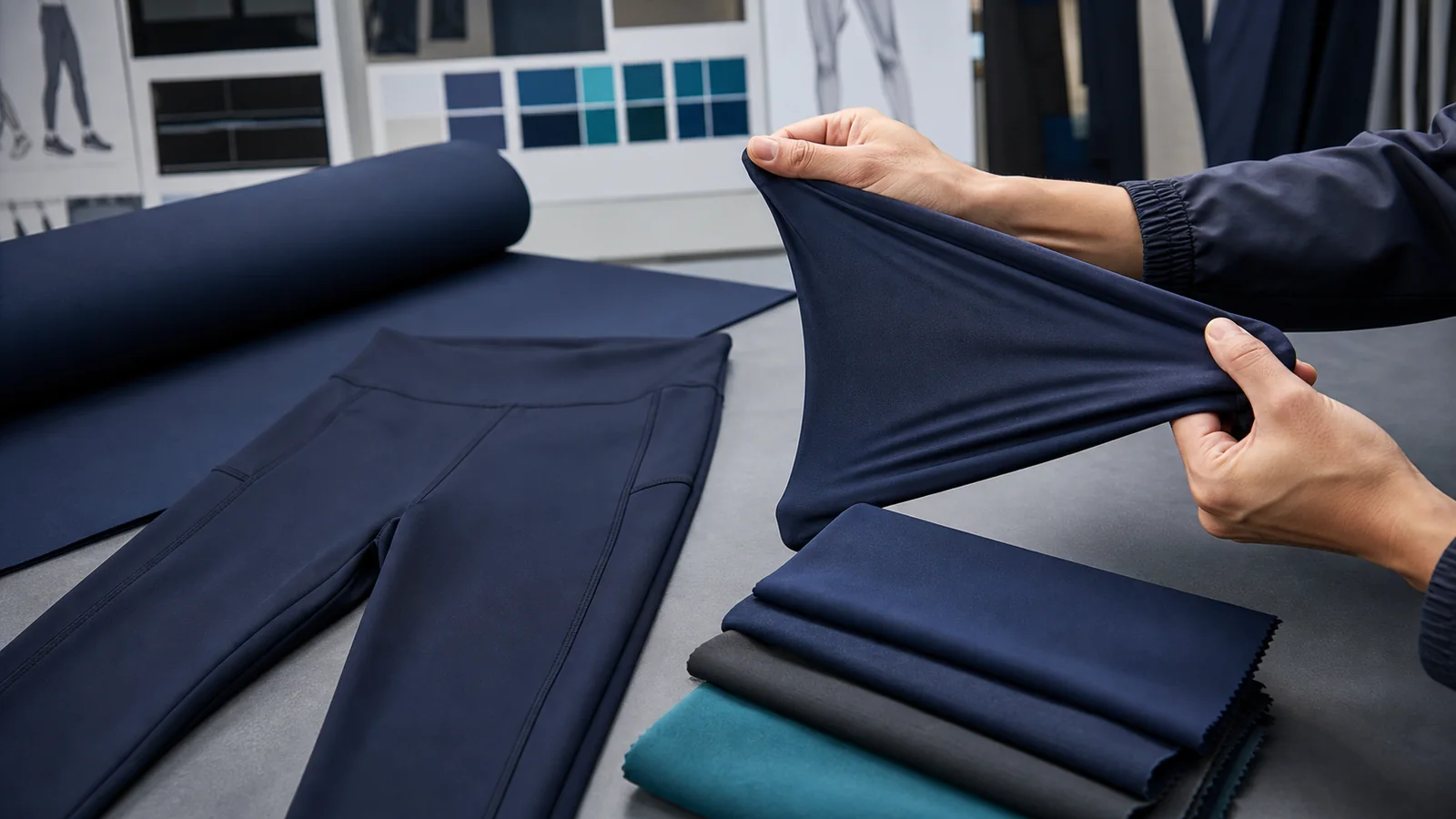
Nylon spandex fabric is a performance textile that blends strong, smooth nylon fibers with elastic spandex fibers. It is widely used for premium leggings, yoga wear, sports bras and fitted activewear because it can provide a soft hand feel, four-way stretch, shape recovery and abrasion resistance.
Why Fabric Selection Matters for Premium Activewear
When developing premium activewear, fabric selection is one of the most important decisions a brand makes. The material determines not only appearance and skin feel, but also how a garment moves, supports, recovers and performs after repeated wear and washing.
Among the available performance fabrics, nylon spandex remains a common choice for leggings, yoga wear, sports bras, cycling shorts and compression garments. Buyers value the blend for exceptional softness, high elasticity, comfortable recovery, smooth surface and useful abrasion resistance.
These benefits are not guaranteed by the fiber name alone. Yarn quality, knit construction, GSM, dyeing, finishing, pattern tension and sewing all influence the result. Private label brands should approve the specific fabric and finished sample rather than assuming every nylon spandex fabric performs the same way.
Nylon Spandex Fabric Composition
Nylon
Nylon is a synthetic fiber known for a smooth hand feel, strength, abrasion resistance and durability. In premium activewear it often creates a softer, less dry surface than many standard polyester constructions. The final touch still depends on yarn fineness, knitting and finishing.
Spandex or Elastane
Spandex supplies extension and recovery. It allows a close-fitting garment to move around the hips, knees and torso, then return toward its original dimensions. Spandex percentage is only one engineering variable; yarn tension, stitch density and pattern reduction determine how that elasticity feels on the body.
| Fabric Composition | Common Application | Development Priority |
|---|---|---|
| 75% Nylon / 25% Spandex | Premium leggings and compression wear | Balance support, opacity and comfort |
| 80% Nylon / 20% Spandex | Yoga wear and studio apparel | Soft hand feel with stable recovery |
| 82% Nylon / 18% Spandex | Lightweight fitted activewear | Mobility, coverage and shape retention |
| 70% Nylon / 30% Spandex | High-resistance compression directions | Wear comfort, seam strain and sizing |
The ideal ratio depends on product category, required compression, target customer, climate and price position. A higher spandex number should not replace physical testing.
Why Nylon Spandex Is Popular for Activewear
1. Premium Soft Hand Feel
A well-finished nylon spandex knit can feel smooth and comfortable against the skin. This makes it suitable for yoga, Pilates, studio workouts and lifestyle garments worn for extended periods. The premium touch is a major reason brands use nylon-based fabric for higher-positioned leggings and coordinated sets.
2. Four-Way Stretch Performance
Activewear must follow squatting, stretching, running and rotational movement. A four-way stretch construction extends both widthwise and lengthwise. The buyer should measure both directions because extension can differ. Strong movement range is useful only when the fabric and seams also recover after repeated loading.
3. Shape Retention
Leggings need to maintain waistband stability, body contour and compression perception. Good recovery reduces bagging at the knees and seat. Recovery should be tested through repeated extension cycles and again after washing, not judged from one hand pull.
4. Comfort for Skin-Contact Products
Yoga leggings, sports bras, crop tops and cycling shorts sit directly against the body. A smooth surface can reduce friction and improve long-wear comfort. Garment comfort also depends on seam type, thread, edge finishing, label placement and moisture conditions.
5. Durability and Abrasion Resistance
Nylon can provide useful resistance to repeated movement and surface friction. Nevertheless, pilling, snagging, colorfastness and wash stability must be checked for the exact fabric. Brushed finishes may feel softer but can behave differently from smooth constructions.
Nylon Spandex Fabric GSM Guide
GSM means grams per square meter and describes fabric weight. It influences coverage, warmth, drape, compression perception, shipping weight and cost, but it is not a standalone quality score. Knit density, yarn, finish and color can make two fabrics at the same GSM perform differently.
| GSM Range | Typical Characteristics | Common Application |
|---|---|---|
| 150-180 GSM | Lightweight and breathable | Tops and lightweight training layers |
| 180-220 GSM | Balanced coverage and stretch | Yoga apparel, sports bras and flexible shorts |
| 220-250 GSM | More coverage and supportive hand | Premium leggings and fitted gym wear |
| 250-280+ GSM | Thicker and more resistant | Compression or cool-climate products |
Many premium leggings are developed around 200 to 250 GSM, but the correct weight depends on color, knit structure, climate, opacity target and pattern fit. A heavy fabric can still become transparent when stretched if the construction or fit is unsuitable.
Is Nylon Spandex Fabric Squat Proof?
Nylon spandex leggings can be squat proof, but fiber composition alone cannot guarantee opacity. Buyers should review four connected factors.
- Fabric weight and density. GSM can support coverage, while knit density controls how much the structure opens under stretch.
- Fiber ratio and recovery. The blend must stretch without permanent growth, but more spandex does not automatically create better coverage.
- Color and finishing. Light shades, brushed surfaces and some dye lots can change opacity or visual show-through.
- Garment pattern and sizing. Excessive pattern reduction or an undersized garment places more tension on the fabric and can create transparency.
A professional activewear manufacturer should test opacity on the finished garment during movement, together with recovery, colorfastness, seam extension and wash performance.
Nylon Spandex vs Polyester Spandex: Which Is Better?
Both blends are widely used. Nylon spandex often supports a soft premium position, while polyester spandex can be practical for moisture management, sublimation and cost-sensitive performance programs. The right choice depends on the product rather than a universal ranking.
| Feature | Nylon Spandex | Polyester Spandex |
|---|---|---|
| Softness | Often excellent with a smooth premium surface | Good, depending on yarn and finish |
| Moisture Direction | Comfortable but may dry more slowly | Often preferred for quick-dry products |
| Color and Printing | Good; method and colorfastness require confirmation | Strong color route and useful for sublimation |
| Cost Direction | Often higher for premium constructions | Often more cost-efficient for volume programs |
| Best Fit | Premium leggings, yoga and studio apparel | Running, teamwear and printed training products |
For a deeper fiber-by-fiber decision, use the nylon spandex vs polyester spandex comparison.
How to Choose the Right Nylon Spandex Fabric
Step 1: Define Product Purpose
Yoga leggings prioritize softness, mobility and stable recovery. Training leggings may need firmer compression, abrasion resistance and sweat management. Sports bras need controlled stretch and support rather than maximum extension.
Step 2: Set the Market Position
A premium position may justify finer yarn, more controlled finishing and a softer surface. A target cost should be discussed with performance requirements so the supplier can propose realistic alternatives rather than silently reducing quality.
Step 3: Confirm Compression
Review spandex ratio, stretch resistance and pattern reduction together. The same fabric can feel different across garment sizes or patterns. Wear testing should include movement, comfort and removal, not just appearance.
Step 4: Approve Swatch and Garment Tests
Record composition, GSM, color, width, stretch, recovery and finish on the approved fabric reference. Then test the finished sample for fit, opacity, seams, pilling, washing and logo durability before bulk production.
Common Nylon Spandex Fabric Selection Mistakes
Choosing Only by Price
A lower price can hide weak recovery, inconsistent dyeing, poor pilling performance or limited repeatability. Compare approved specifications and total product risk.
Ignoring GSM and Knit Density
An unsuitable weight or open construction can create transparency, weak support or the wrong market position.
Skipping Fabric and Garment Testing
Always test extension, recovery, opacity, washing, colorfastness and surface durability. A swatch cannot reproduce body tension, seams or waistband construction.
Choosing the Wrong Composition for the Product
A soft yoga fabric and a high-compression training fabric should not automatically use the same ratio, finish or pattern.
Why Work With an Experienced Activewear Manufacturer?
Developing premium nylon spandex activewear requires coordination between fabric recommendation, GSM selection, pattern adjustment, sample testing, branding, sewing and quality control. An experienced manufacturer should explain the tradeoffs and keep an approved reference for bulk production.
Canting Activewear supports OEM and ODM development for custom yoga wear, tennis apparel, golf polos, swimwear and performance activewear. Buyers can submit a tech pack, reference garment or fabric direction for review through the custom manufacturing process.
FAQ: Nylon Spandex Fabric
What is nylon spandex fabric?
Nylon spandex fabric is a performance knit that combines nylon strength and smoothness with the elasticity of spandex, also called elastane. The blend is widely used for leggings, yoga wear, sports bras, cycling shorts and fitted activewear because it can provide a soft hand feel, multidirectional stretch and stable recovery.
Is nylon spandex good for leggings?
Yes. Nylon spandex is one of the most common directions for premium leggings because it can balance softness, stretch, recovery, abrasion resistance and a close-to-body fit. The exact fabric still needs garment-level testing for opacity, pilling, waistband stability, wash performance and comfort.
What is the best nylon spandex ratio for leggings?
Common starting points include 75% nylon with 25% spandex and 80% nylon with 20% spandex. A higher spandex percentage does not automatically mean a better fabric. Knit density, yarn quality, finishing, pattern reduction and the intended compression level must be evaluated together.
Is nylon spandex better than polyester spandex?
Neither blend is universally better. Nylon spandex is often selected for a softer, more premium surface in yoga and studio apparel. Polyester spandex can be practical for quick-dry products, sublimation printing, teamwear and cost-controlled programs. Buyers should decide by product use and testing results.
What GSM is best for activewear leggings?
Many premium leggings are developed around 200 to 250 GSM, while lighter or more supportive products may sit outside that range. GSM describes weight, not quality. Opacity, knit structure, color, recovery, climate, compression target and pattern fit must also be checked.
Can nylon spandex fabric be customized?
Yes. Depending on mill capability and minimums, brands can specify composition, GSM, knit construction, color, surface finish and functional treatment. Custom development should begin with a clear performance brief and proceed through swatch approval, lab testing, garment sampling and bulk reference confirmation.
Conclusion
Nylon spandex remains a reliable direction for premium activewear because it can balance comfort, stretch, recovery, durability and a smooth appearance. The right result depends on the complete fabric specification and how it works with the garment pattern and construction.
Brands should approve composition, GSM, color, finish and testing results before bulk production. Working with an experienced manufacturer helps connect fabric selection to accurate product development and consistent production quality.
Ready to Develop Your Custom Activewear Collection?
Work with Canting Activewear for OEM and ODM activewear manufacturing solutions, from nylon spandex fabric sourcing and sample development to branding and bulk quality control.